.png)


How's Your Breath Today? Why Your Core Is the Key to Better Breathing
Of all the necessities in life, breathing is your most immediate. A reasonably healthy person can survive about 6 weeks without food and a few days without water. But without breathing, you would not survive for more than a few minutes.
Your breath is your most intimate companion in your journey through life. You start breathing the moment you are born, and the exhalation of your last breath will signal your death. In between, your breath will be with you wherever you go.
Although we can’t survive without breathing, many live without breathing properly. The stressful pace of of our lives, sedentary work and leisure pursuits all contribute to unhealthy breathing patterns. And poor breathing habits can lead to a heavy toll on our physical, mental and emotional health and happiness. Viruses and bacteria thrive in oxygen deprived bodies, whilst shallow breathing contributes to many stress related health conditions.
How's your breathing today? Just pause for a moment and check in with it - how does it feel? Can you feel your inhale making your belly area swell and the exhale allowing it to shrink? Can you feel your ribs moving outwards as you inhale and inwards on your exhale? These are signs that you are breathing well, the key to better breathing. If not, then today is a good day to start learning about your breath and how to breathe better, knowing that better breathing is an easy way to give yourself the gift of better health. Just read on to discover lots more about your body's awesome breathing processes, how you can support them and why we place so much importance on the breath in our yoga practice.
A Little Bit of Breathing Anatomy
So first, some basic anatomy. Don't worry, it's not hard and it is very interesting!
The first thing that you need to know is that your lungs have no independent power, they rely completely on your breathing muscles to inflate and deflate.

When you breathe in, your Diaphragm, a large domed muscles that sits just beneath your ribs, flattens out thereby creating more space withing the chest for the lungs to expand (see right). This is complemented by the Intercostal Muscles pulling the ribs outwards also helping to increase the space for the lungs to expand into. This increase in space causes a drop in pressure within the chest cavity, which allows the air from outside of the body to flow inwards - this is your inbreath. The exhale is the reverse - the diaphragm releases upwards and the intercostal muscles relax to allow the ribs to move inwards, thereby increasing the pressure within the chest cavity and forcing the air back out of the lungs, creating your exhale. So, you see, it's the muscles that do the work, not the lungs themselves. (Even though the lungs are substantial to look at, tend to think of them as lightweight bags, just waiting to be inflated!)

Your core is also a vital part of the breathing process. Picture it as cylinder (see left) with your Transverse Abdominus muscle acting as a girdle, or the main body of the cylinder, with the Diaphragm as the lid and your Pelvic Floor as the base. This whole 'unit' acts as one with your breathing. The action of the Diaphragm pushing downward on the inhale causes greater pressure beneath, which in turn pushes your organs and viscera outwards, which is seen as the swelling of the belly as you inhale. As you exhale, the reverse happens and the belly shrinks back to it's original size and shape. The pressure exerted by the diaphragm also pushes down on the pelvic floor. Your Pelvic Floor is a collection of muscles that form a hammock at the base of the pelvis, supporting your bladder, bowel and reproductive organs.
Breathing and Health
The key to better breathing is a strong and flexible diaphragm, strong intercostal muscles and strong core muscles. These comprise: the rectus abdominus - your 6-pack muscles; the obliques, which allow you to twist, and the transverse abdominus, the girdle that holds everything together. We also need a strong pelvic floor to resist the pressure created by breathing. Have you ever sneezed or coughed suddenly, unexpectedly and had a little leakage? A little warning sign that you need to pay attention to your pelvic floor!
Good breathing happens when we can get our breath right down into the belly. This type of breathing, called diaphragmatic breathing, is immensely good for not only our physical musculature - keeping the breathing muscles strong and healthy - but it also has major positive implications for our health as well.
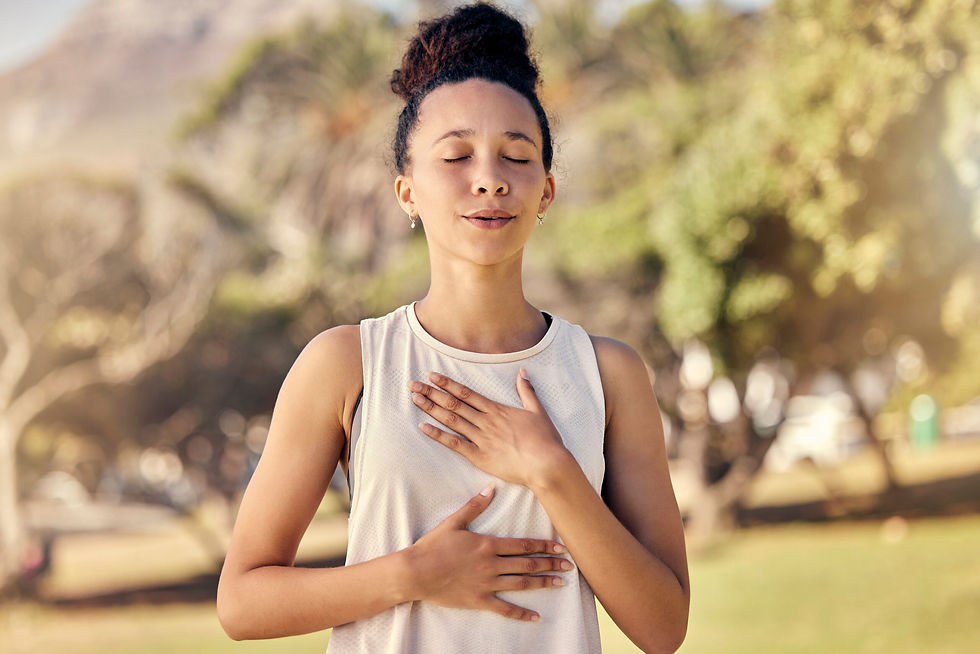
Good breathing , which entails slow deep breaths down to the belly, signals the nervous system to relax, which lowers blood pressure and heart rate. Slow deep breathing also allows the lungs to fill more effectively, increasing the amount of oxygen available for your body to use. Better oxygen intake can improve your energy levels and your body's performance.
As we breathe more slowly and deeply, our bodies respond by moving from the Sympathetic Nervous System - your daily, busy, active, alert state - to the Parasympathetic Nervous System, your rest and digest state where recuperation, restoration and rest can all happen. Being in this state, with lower stress levels, assists the body's circulation and immune response.
Slow deep breathing can also help improve concentration and mental clarity, as it reduces the stress levels that sometimes keep the mind in a state of anxiety and fear. It can also help you sleep better, reducing insomnia problems and promoting better sleep quality.
Consciously controlling your breath has major physiological effects on your body.
For example, your heart rate variability is directly affected by your breath. HRV is the difference in heart rate between your inhale and your exhale. Inhales increase the heart rate, being the energetic part of the breath and exhales decrease the heart rate, being the relaxing part of the breath. The difference between these is your HRV. A higher HRV is associated with better health, lower anxiety and better brain function. Lower HRV can be an indication of high levels of stress and can be an indicator of PTSE. One way to improve your HRV is by producing long slow exhales.
Try this Abdominal Breathing Exercise now:
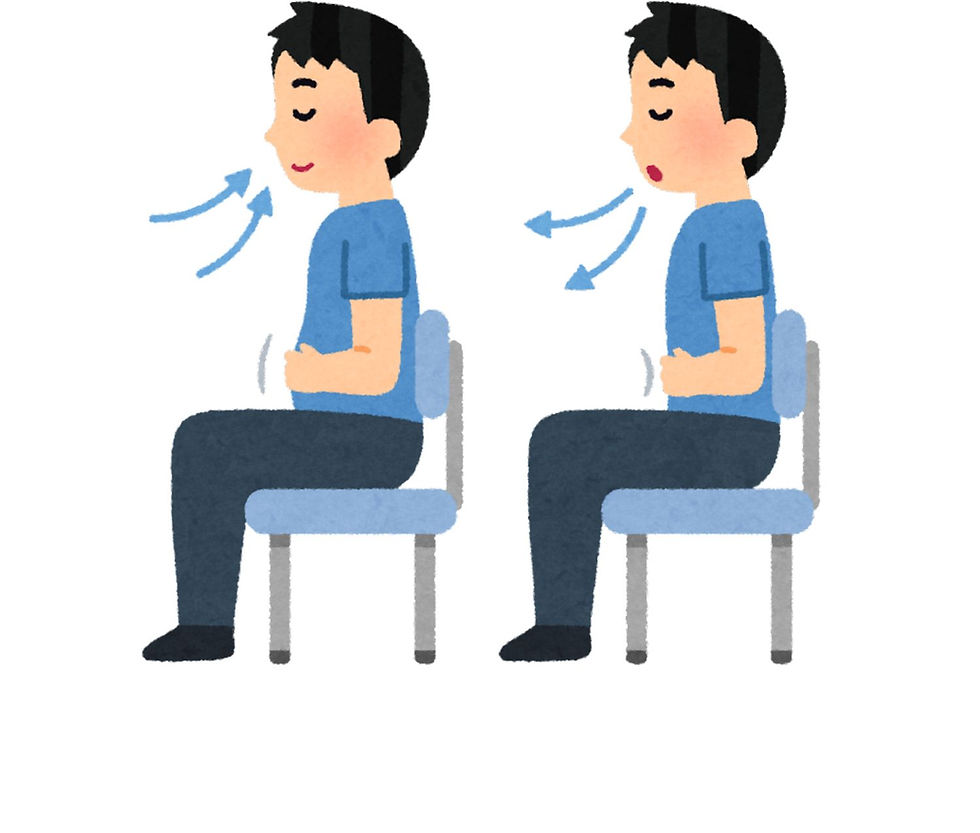
Sit comfortably. This can be in a chair, with the spine upright and supported and the feet on the floor or supported on a stool or some books of your feet don't quite comfortably reach the floor. Or it can be on the floor, sitting against the wall, should you want support, or away from the wall maybe sitting on a cushion or block or books to allow the spine to be naturally upright.
Place your hands on your belly, with the finger tips just touching. Close your eyes or just have a soft gaze, looking at the floor in front of you with out a focus point. As you breath in, the belly expands, and your fingers will move away from each other slightly. As you breath out, your finger tips will once again touch. Stay breathing here, at a rhythm that works for you, for a few minutes - set a timer if you like - and when you have finished, take a moment or two to just notice how you feel - how your breath feels (slower? deeper? more comfortable?), how your body feels (more relaxed? more comfortable? quieter? ) and what your thoughts are doing (less frantic? quieter? softer?). Just being aware of the pleasant after effects of doing a little good breathing can have a really positive influence on your body and mind.
Are you a Reverse Breather?
Are you a reverse breather? Does your belly come inwards on your inhale? If so, don't panic! There are things we can do to 'reteach' our bodies how to breathe well. We all started off in life being able to breathe just fine (think of how a baby's belly rises and falls so beautifully!). Life, full of stresses and illnesses can play havoc with our physiological being and sometimes the breathing basics get lost. Here's something you can try right now that might help you get back on the path of better breathing.
Try this basic breathing technique for correcting reverse breathing.

Bend the knees enough so that you can place the weight of you torso on your
arms (keep the elbows straight). Once in position, let the abdomen relax so that breathing is unimpeded by any muscular tension.
Then with each exhalation, slowly lift the belly button area toward the spine, at your normal breath speed. With the inhalation, relax and allow your abdomen to expand outward and downwards. Repeat at least 20 times to imprint the relationship between the breath and abdomen, and to deepen the range of movement in the navel area. Practice this daily until the correct breathing pattern is habitual (belly out on inhale, belly in on exhale).
Does this help? Let me know in the comments.
Breathing and Yoga
So what about the connection between yoga and breathing? Throughout a yoga class, I ask my students to be aware of their breath – consciously inhaling, consciously exhaling. Simply observing the breath helps bring awareness into the present moment. And yoga is all about being present, the mind and body acting together in the present moment, as opposed to the mind being off in past memories or projecting an imaginary future. Our body and breath are always in the present moment and by focusing on these, we become present.
Additionally, conscious breathing within each posture keeps the mind alert and lets yoga practice be exploratory instead of routine. We can observe what part of the body is moving with the breath and use the breath as tool for many things - calming the mind, a focus point, a tool for an extra stretch within a yoga posture. We can find a sense of calm and stability within the breath, settling the body before and during balances or keeping everything steady and focused during asana work. Conscious breathing allows you to move closer to the essence of yoga – a awareness of your thoughts, feelings and emotions and a deeper connection within to your own body.
For more information about my yoga classes get in touch by filling in the form below.


